How to Scale Influencer Marketing Like Unilever: Without the Enterprise Budget
Unilever manages nearly 300,000 creator relationships across global markets. The strategy behind that scale is available to any brand, if you have the right infrastructure. Here's what that looks like in practice.

Unilever now manages nearly 300,000 creator relationships across its brand portfolio. Two years ago, that number was 10,000. The company didn't just run more influencer campaigns. It rebuilt the entire operational infrastructure behind how it finds, activates, and measures creator partnerships.
Most brands look at a number like 300,000 and assume it's only possible because of enterprise-level resources and a team of hundreds. The reality is more interesting. The underlying strategy, including much of the infrastructure needed to execute it, is available to brands at a fraction of the size and budget. What's required is a different way of thinking about creator partnerships and the right tools to support it.
Why Scale Matters in Influencer Marketing
The logic behind Unilever's scale play is straightforward. Trust in brand advertising has eroded. Trust in peer recommendation remains strong. If you can build a large enough network of authentic voices recommending your brand, you generate a compound effect that broadcast advertising cannot replicate: thousands of simultaneous conversations in communities where your brand has no direct presence.
The challenge is that this model only works if the voices are genuinely credible. A network of 300,000 creators posting identical sponsored captions is not a distributed trust network. It's a very expensive version of the same broadcast problem, just with more senders. Unilever CEO Fernando Fernandez is explicit about this when he describes influencers as part of a broader framework of "other people's recommendations," including professionals and everyday users. The emphasis is on earned credibility, not paid reach.
This is where the operational problem becomes interesting. Finding creators who are genuinely credible within a specific niche, in a specific market, speaking to a specific audience at scale is hard. Doing it manually is almost impossible. Doing it badly produces exactly the wrong results.
The Discovery Problem
The single biggest barrier to scaling influencer marketing is discovery. Finding 5 to 10 quality creators for a campaign is manageable with manual research. Finding 500, in 20 different markets, with different language requirements, audience demographics, and content niches, is a different problem entirely.
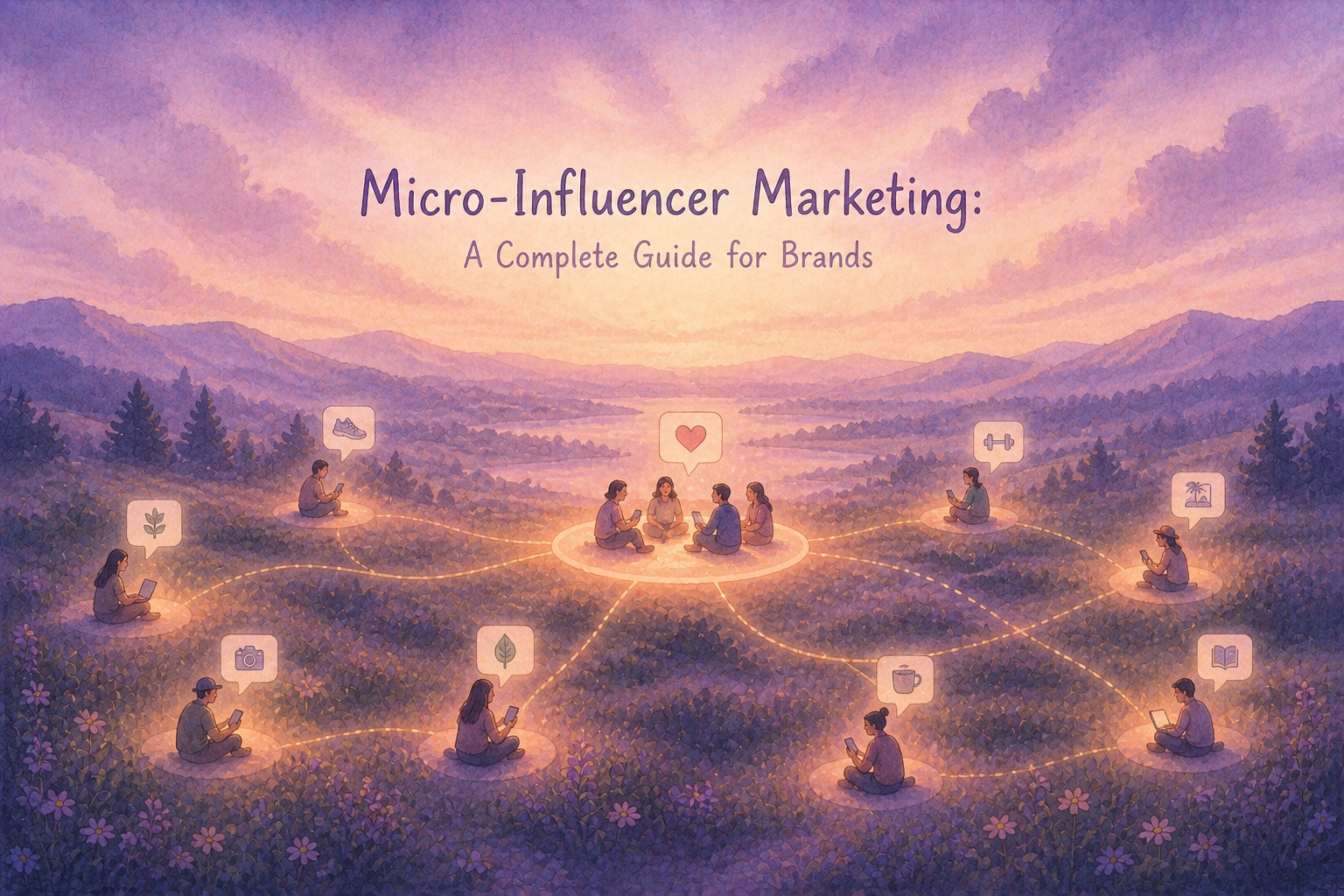
Traditional discovery methods, including hashtag searches, agency recommendations, and creator marketplaces, break down at scale. They surface the obvious names, the creators actively seeking brand deals, the profiles optimised for discoverability rather than genuine audience connection. The creators with the highest ROI potential are often the ones who are hardest to find: niche community voices, local micro-influencers with deeply engaged audiences, subject matter experts whose recommendations carry real weight.
Semantic search changes this. Rather than searching for keywords or follower counts, semantic discovery platforms find creators based on what they actually talk about and who genuinely engages with them. This matters because the best creator for a specific brief might never appear in a hashtag search for the obvious keywords. They surface when you describe the type of content, the audience mindset, or the cultural moment you are trying to participate in.
CreatorMap is built on this premise. The search engine finds creators based on content alignment and audience fit, not just metadata. For brands trying to replicate Unilever's approach to distributed trust, finding voices genuinely embedded in the communities they want to reach, this is the difference between building the right network and building a large one.
Multi-Market Coordination
Unilever operates across 190 countries. Even at a much smaller scale, multi-market influencer programs present a coordination challenge that most brands underestimate.
The temptation is to centralise: find creators centrally, apply consistent briefs, manage everything from a single team. This works for brand consistency but tends to produce campaigns that feel imported rather than local, which undermines the core value proposition of influencer marketing. Audiences can tell when content has been briefed by a global headquarters team rather than created by someone who actually participates in their community.
The model that works, the one Unilever is executing, treats local markets as genuinely distinct. It recognises that the creators who matter in Jakarta are different from those who matter in São Paulo, and that the cultural moments worth participating in are different in Lagos than in London. It requires local discovery capability, not just local execution.
This is operationally demanding. It requires either large local teams or tools that give central teams genuine visibility into local creator landscapes without requiring local offices in every market. The brands that crack this are the ones that will be able to replicate Unilever's approach without Unilever's headcount.
The SASSY Principles in Practice
Unilever has formalised its philosophy into what it calls the SASSY model: contemporary relevance, social validation, and constant innovation. These are not abstract values. They have operational implications for how brands should approach creator partnerships.
Contemporary relevance means brands need to know what their communities are talking about before they commission content. The `#VaselineVerified` campaign worked because it tapped into conversations consumers were already having about skincare hacks, and added value by validating them through science. The brand didn't create the trend. It participated in it. To do that consistently, you need ongoing visibility into what creators in your category are producing and what their audiences are engaging with.
Social validation means the credibility has to be genuine. Unilever's approach to influencer selection reflects this. Working with Arsenal Women players and a group of teenage girls to co-create a campaign about period stains in sport is not a media placement decision. It is a credibility decision. The voices in the campaign have earned the right to speak on the topic through lived experience. For brands trying to build this kind of credibility at scale, the selection criteria have to go beyond reach and engagement rate to include genuine audience trust within the specific cultural territory the brand wants to enter.
Constant innovation requires infrastructure for rapid testing. Unilever describes an operating model with "content engines that generate, personalise and adapt thousands of assets in real time." For most brands, the equivalent is the ability to run concurrent creator campaigns across multiple niches, learn quickly from what performs, and reallocate budget toward what works. That requires enough creators in the network to allow genuine experimentation, not just enough to fulfill one campaign brief.
What This Looks Like for a Mid-Sized Brand
A brand with a fraction of Unilever's budget can still build a scaled creator network if it approaches the problem systematically.
Start with depth, not breadth. The instinct is to find as many creators as possible. The better approach is to find 20 to 30 creators with genuine credibility in your most important niche, build real relationships with them, and let performance data tell you which relationships are worth expanding. A small, high-quality network outperforms a large, generic one on almost every metric that matters.
Invest in discovery infrastructure early. The cost of finding the wrong creators, or missing the right ones because your search methodology only surfaces obvious choices, compounds over the lifetime of a program. Semantic discovery tools pay for themselves not just in time saved but in campaign quality. Knowing that a creator has a genuine connection to a specific topic or community, rather than just a keyword that matches your brief, changes the quality of what you can build with them.
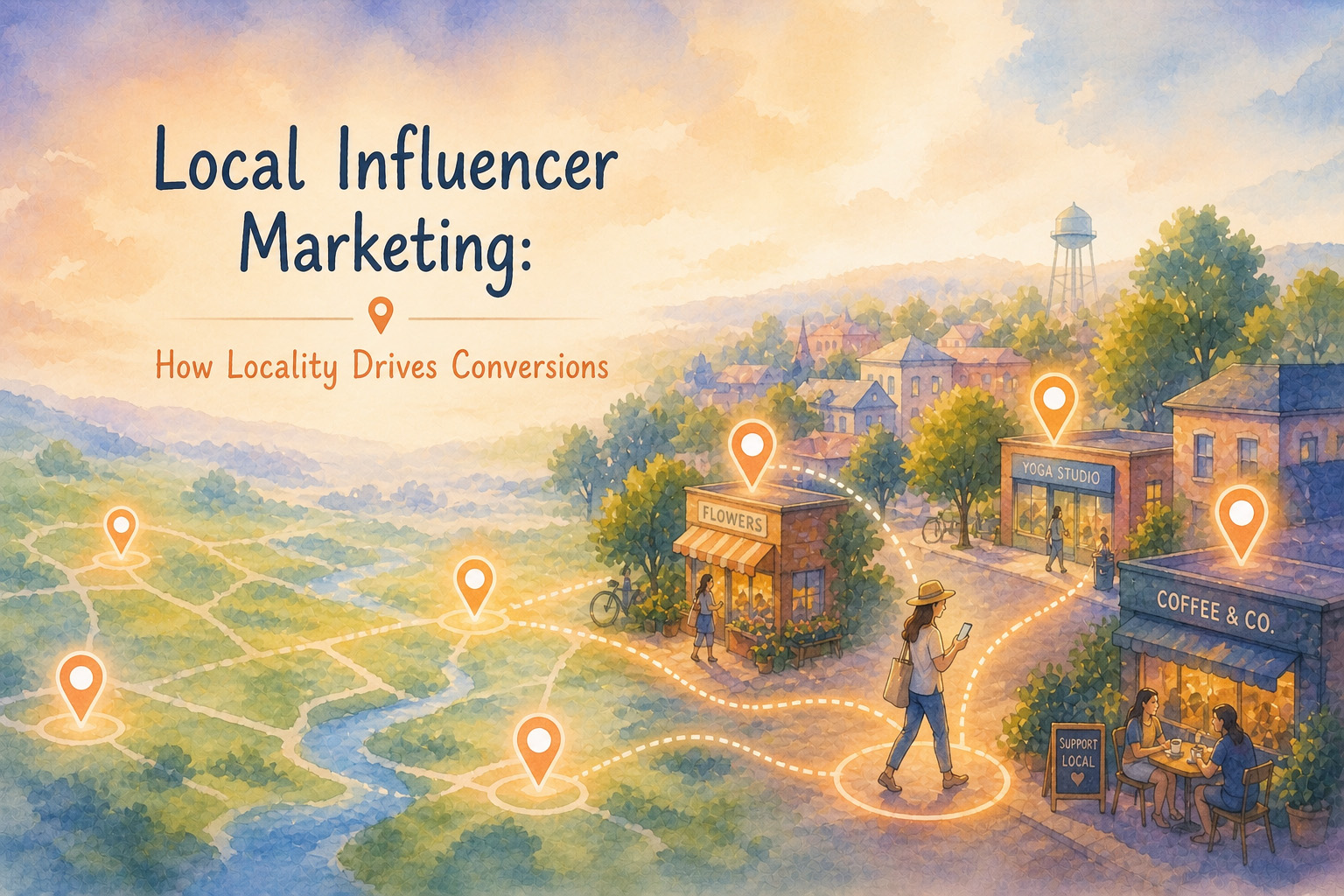
Build in geographic specificity. Even if you are only operating in one country, local matters. A creator with 15,000 followers in the specific city where you are opening a new location is worth more to that campaign than a national creator with 500,000 followers who has never mentioned your city. The brands that build this level of geographic granularity into their creator programs are consistently outperforming those that treat geography as a secondary filter.
Track at the creator level, not the campaign level. Unilever is still refining its understanding of what drives ROI in this model. That work requires creator-level performance data, not just aggregate campaign metrics. Unique tracking links, discount codes, and platform analytics give you the signal you need to understand which creators are driving genuine commercial outcomes and which are inflating vanity metrics.
The Infrastructure Question
The gap between running good individual influencer campaigns and building a scaled creator network is fundamentally an infrastructure gap. It is the difference between finding creators manually for each brief and having a system that gives you ongoing visibility into the creator landscape in your category. Between one-off partnerships and managed relationships. Between campaign-level reporting and creator-level intelligence.
Unilever has built this infrastructure over years, with significant investment. Most brands are still approaching influencer marketing as a series of individual campaigns.
The tools to close that gap now exist. Semantic discovery platforms like CreatorMap give brands the ability to find creators based on genuine content alignment, not just keyword matching. Multi-market search capability means you can build local programs without local offices. Creator-level analytics give you the data to understand what is actually working.
The strategy Unilever is executing is not a secret. The principles are clearly described by their own CMO and CEO. What separates brands that can execute it from those that cannot is whether they have invested in the infrastructure to find the right voices, build genuine relationships, and learn systematically from every campaign they run.
That infrastructure is more accessible than it has ever been. The question is whether your brand is building it.
Statistics referenced are illustrative of broader industry trends. Unilever data referenced from publicly available statements, including Unilever's 300,000 Creators Signals A Founder-Led Consolidation (Forbes, April 2026). Information on this site is provided for general informational purposes only. See our disclaimer.